
President Abbas: The two-State solution cannot be left hostage to the occupier's will
Date : 30/11/2022
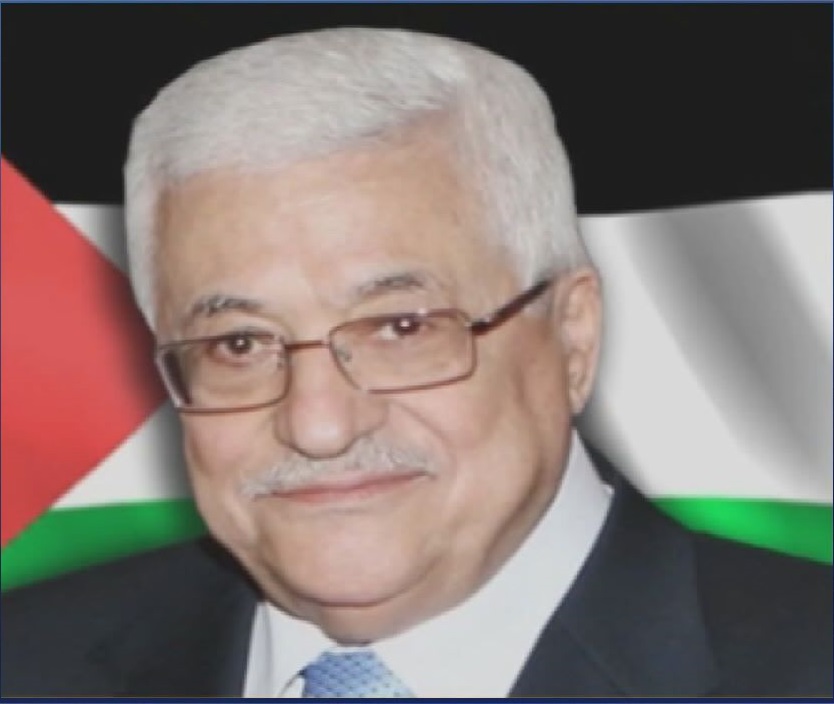
RAMALLAH, November 30, 2022 – President Mahmoud Abbas on Tuesday affirmed that the two-state solution cannot be left hostage to the occupier’s will, stressing that doing so would mean abandoning this solution altogether.
“The two-state solution cannot be left hostage to the occupier's will, as this would amount to an abandonment of the solution itself. Therefore, we stress the importance of recognizing the State of Palestine and supporting its full membership in the United Nations as an embodiment of the natural right of the Palestinian people—just like all other peoples of the world,” President Abbas stated in his message marking the International Day of Solidarity with the Palestinian People.
The message was addressed to United Nations Secretary-General António Guterres, President of the General Assembly Csaba Kőrösi, President of the Security Council Harold Agyeman, and Chair of the Committee on the Exercise of the Inalienable Rights of the Palestinian People Cheikh Niang.
Delivered in Geneva by Palestine’s Permanent Representative to the United Nations, Riyad Mansour, the message called for the convening of an international peace conference under UN auspices in accordance with international legitimacy and international law, with the aim of ending the Israeli occupation and resolving all final-status issues. President Abbas emphasized that a set of guarantees and a clear timeframe must be defined to implement agreed-upon terms, in order to achieve a just and comprehensive peace that ends the occupation and realizes the freedom and independence of the Palestinian people in their State on the June 4, 1967 borders, with Jerusalem as its capital.
President Abbas stressed the need for the international community to intensify its efforts and pressure Israel to end its occupation and halt its crimes.
He warned states that have established trade or diplomatic offices in Jerusalem, or concluded agreements with companies and institutions operating in Israeli settlements, that such actions violate international law and effectively encourage the Israeli occupation authorities to persist in their crimes against the Palestinian people. “We tell these countries that through such actions, you contribute to the suffering of our people by entrenching the occupation of our land. You do not promote regional peace, security, or stability,” he added.
President Abbas asserted that it is unrealistic to expect the Israeli occupier—whose policies promote colonization, settler terrorism, aggression, and siege against the Palestinian people—to one day “wake up and choose justice and peace.”
He reaffirmed that the Palestinian people will not tolerate oppression or injustice and will continue their struggle against the colonial occupation of their land and people. “We will not abandon our culture of peace, which is deeply rooted in us, and we will continue our peaceful popular resistance. We will not accept a future of walls, blockade, apartheid, oppression, hatred, and colonialism,” he said.
President Abbas concluded that the Question of Palestine remains the litmus test for the international community’s credibility and its ability to uphold international law, maintain peace and security, prohibit the acquisition of land by force, and safeguard the right of peoples to self-determination.